

Automatic plant root scanner
How do you photograph 300 plant roots in 4 hours?
The Customer
The Netherlands Plant Eco-phenotyping Centre (NPEC) is a joint research centre of Wageningen University & Research and Utrecht University. Here, scientists work on climate-resistant crops by measuring and analysing plant properties on a scale not possible anywhere else.
The Challenge
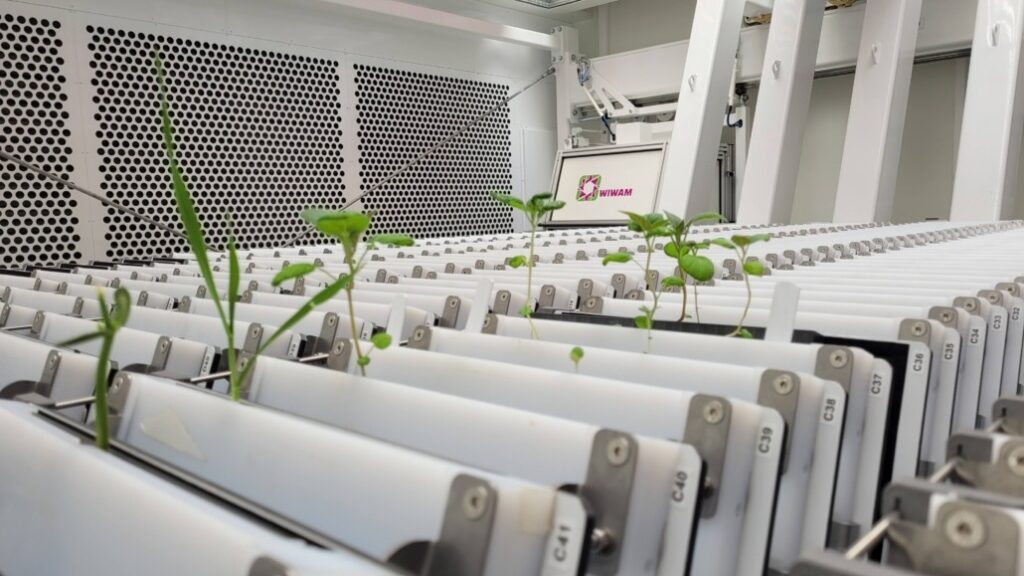
For root studies, researchers use rhizotron plates: transparent plates against which plants grow, so that the root system becomes visible and can be photographed. NPEC needed a system that could shoot 300 of these plates fully automatically, several times a day.
The problem: space was limited and predetermined. An external research firm had worked out concepts, but after review by SMO, these proved unrealistic. The desired throughput was not achievable and reliability was insufficient.
Why this is not a standard machine:
-
Limited space: The installation had to fit into a predetermined space that could not be modified.
-
High capacity: Shooting 300 plates in 4 hours means less than a minute per plate, including transport and positioning.
-
Tight cycle time: Up to 6 recordings per day of each root system, for detailed examination of growth patterns.
-
High resolution: The images should be sharp enough for scientific analysis of root structure and development.
Project Gallery
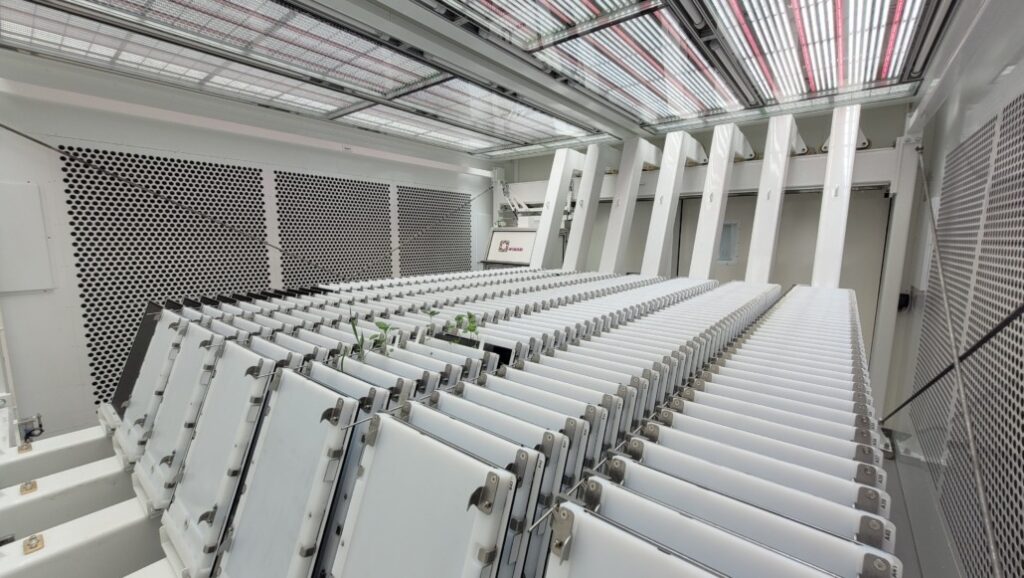
SMO's Solution
The slide projector principle, but for plant roots
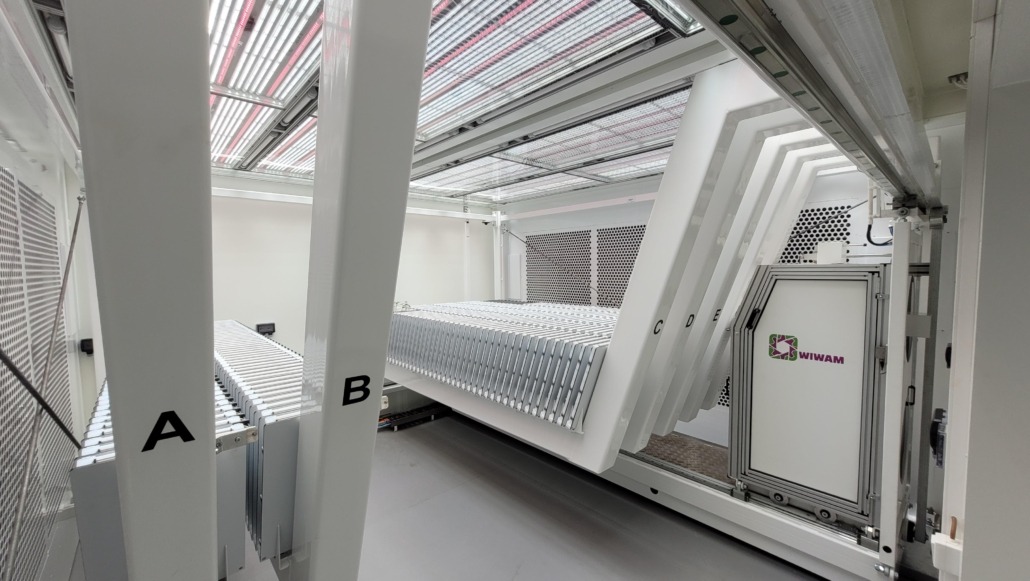
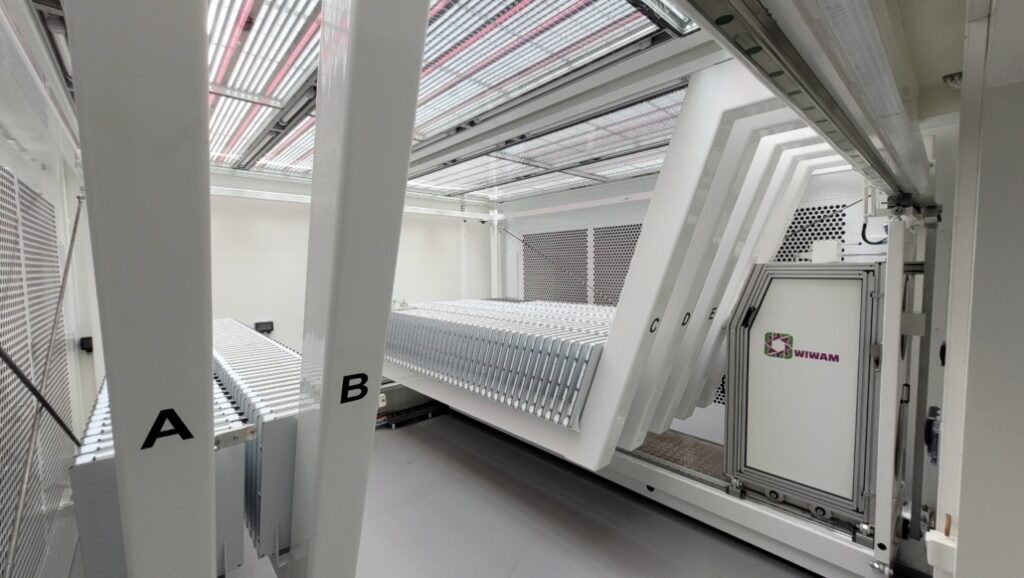
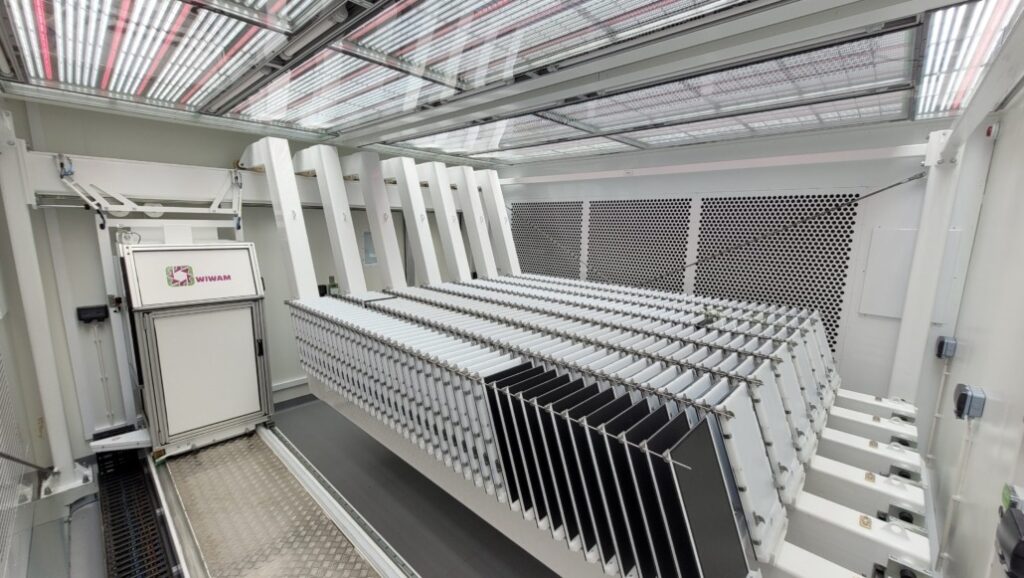
SMO applied the proven concept of the WIWAM line to a problem that initially seemed ill-suited to it. The result: an imaging booth that moves autonomously along all rhizotron plates, pulling them in one by one, and taking high-resolution images of the root system.
Think of an automated slide projector, but for rhizotron plates. The plates stay in place, the camera comes to them. This keeps the installation compact and fits into the predetermined space.
WIWAM line concept
The proven transport principle of WIWAM line was applied to a new challenge. The imaging cab moves along the plates and pulls them in one by one for photographing.
Mechanics and automation go hand in hand
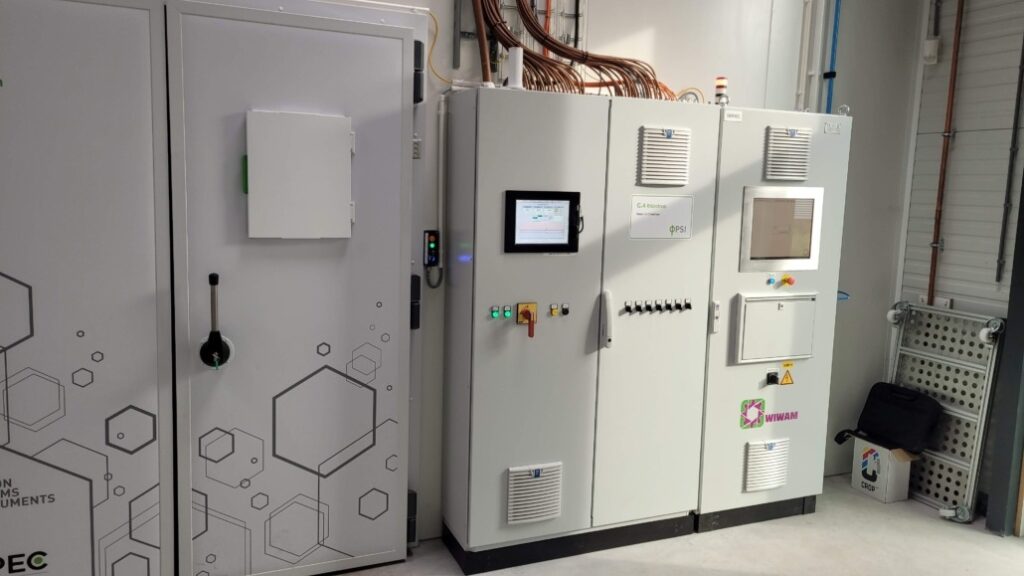
To meet the tight takt time, mechanical engineering and automation worked intensively together. Every second counted. The result: a system that makes the most of both speed and reliability.
Engineering and production under one roof
To meet the branch time, there was no room for compromise. Mechanical engineering and automation had to be perfectly aligned. At SMO, these disciplines sit side by side. This made it possible to optimise, test and adjust together until the system did what it was supposed to do.
The machine in action
The Result
The system photographs 300 rhizotron plates completely autonomously in 4 hours. This makes it possible, in the extreme case, to take 6 images a day of each root system. Researchers can thus monitor plant root growth in detail, with consistent, reproducible images for scientific analysis.
The original concept of an external research firm was discarded after review by SMO. With its multidisciplinary approach and experience with WIWAM line machines, SMO built a system that is cheaper and more robust than what was initially presented.
The machine looked impressive even before it was running. The white finish, the technology - we wanted to show it off right away.
Technical Specifications
- Type Automatic rhizotron imaging system
- Product Rhizotron plates for root examination
- Capacity 300 plates in 4 hours
- Key technology WIWAM line concept, mobile imaging cabin
- Application Plant phenotyping and root growth monitoring
- Completion 2024