

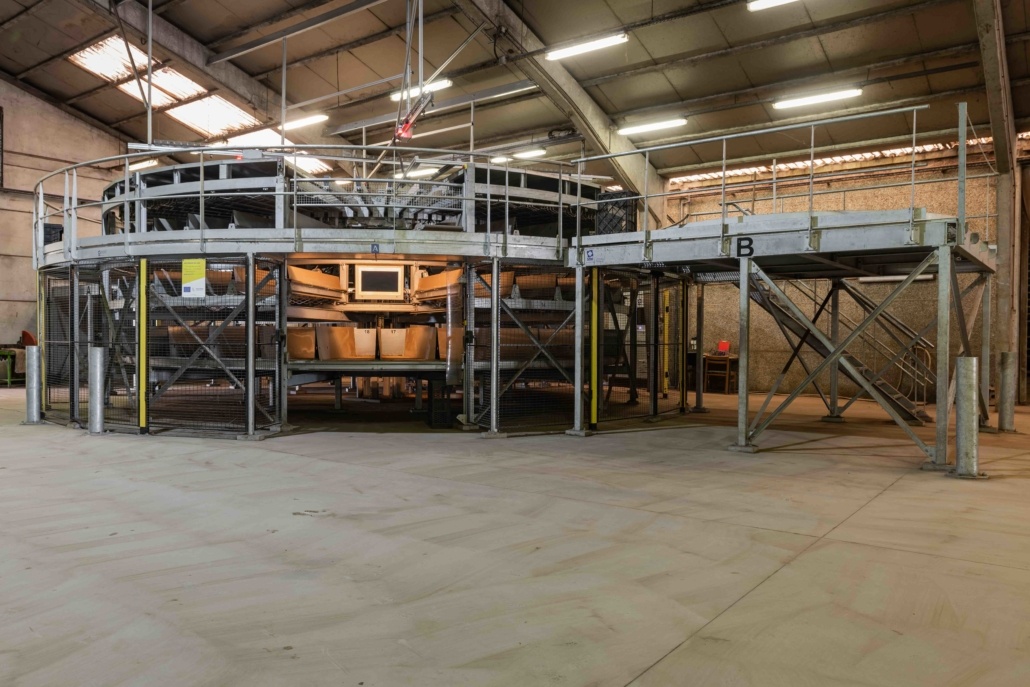
Automatic tree grading machine
How do you sort 25 million twigs a season?
The Customer
Sylva in Lievegem is the largest producer of forest and hedge plants in Flanders. The family business has been in existence since 1936, but its tradition dates back to 1830. Today, Sylva produces 25 million plants a year that go to more than 40 countries worldwide. In 2021, the company won the Lion of Exports for their exceptional international growth.
The Challenge
Every winter season, millions of saplings must be sorted and bundled for sale at Sylva. Customers order plants in specific classes: sorted by length, diameter and quality, in exact quantities.
Until 2015, this was done entirely by hand. Seasonal workers sorted the trees one by one. Time-consuming, labour-intensive, and increasingly difficult to sustain. Finding suitable workers became more challenging every year.
Sylva was looking for a way to automate this process. The problem: a standard machine that could do this did not exist.
Why this is not a standard machine:
-
Difficult to singulate: The saplings are twigs of 50 to 100 cm. They stick together, especially with leaf debris and moisture.
-
Unpredictable roots: Some saplings have long, jagged roots that block or cause poaching in the sorting process.
-
Multiple parameters simultaneously: Not only length and diameter, but also the curvature of the trunk must be measured.
-
Dirt and moisture: Soil to the roots, water, and in some periods even frost and thorns.
Project Gallery
SMO's solution
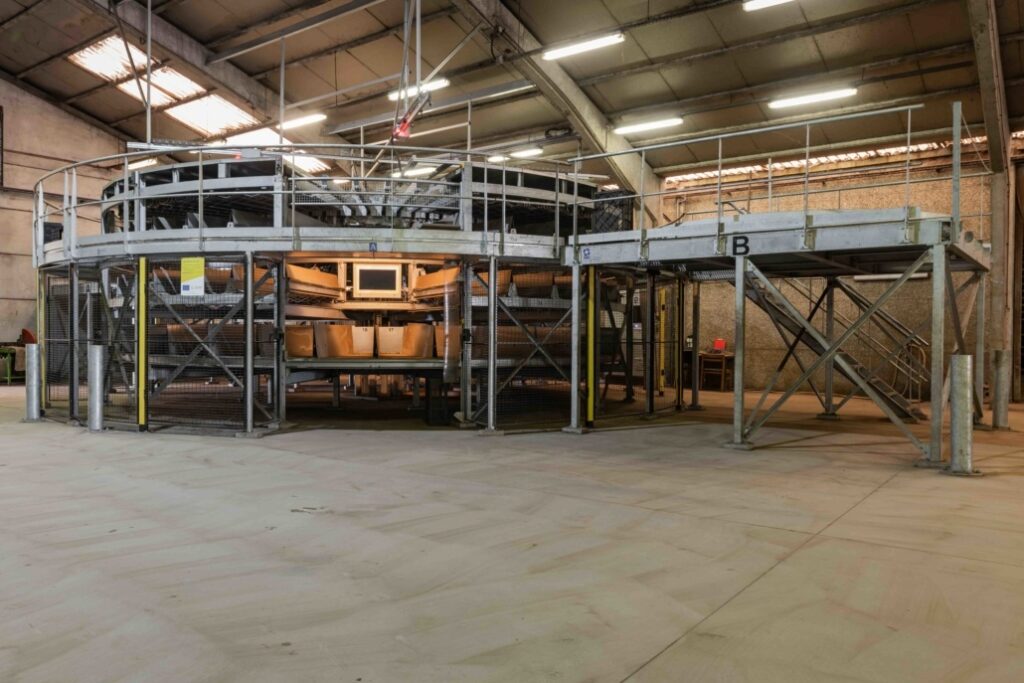
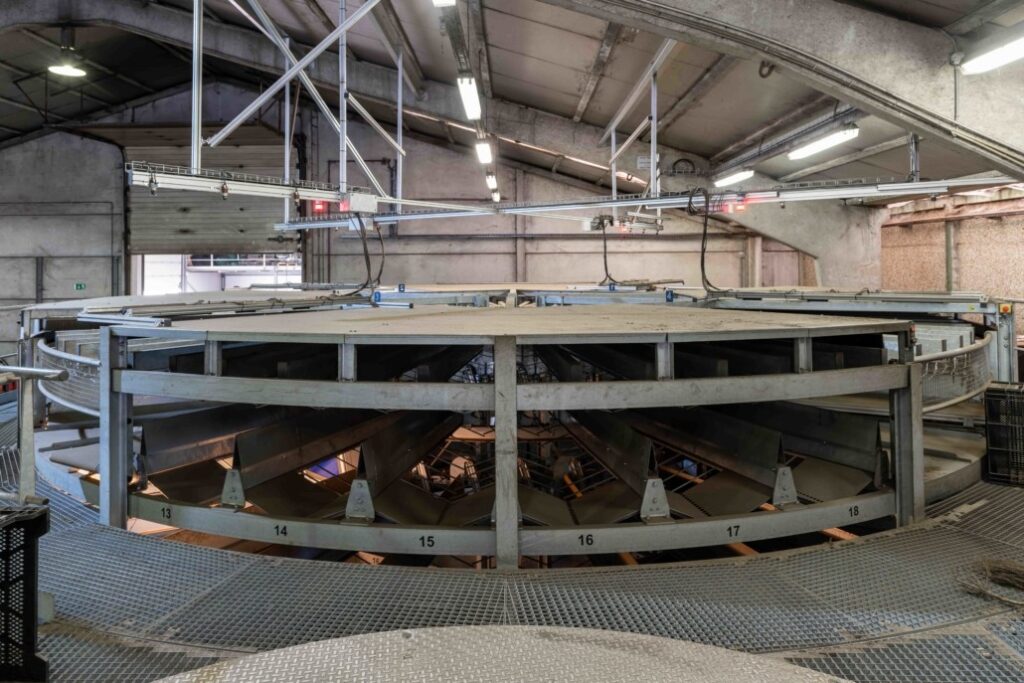
SMO developed the Treegrader: a complete sorting plant in which four operators insert trees.
The solution
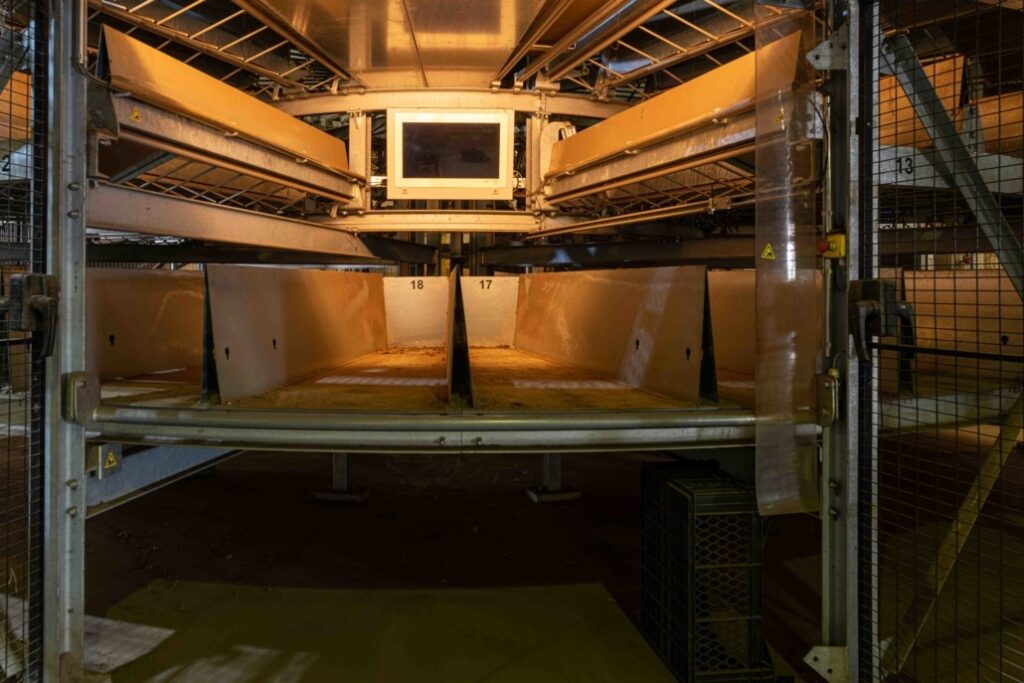
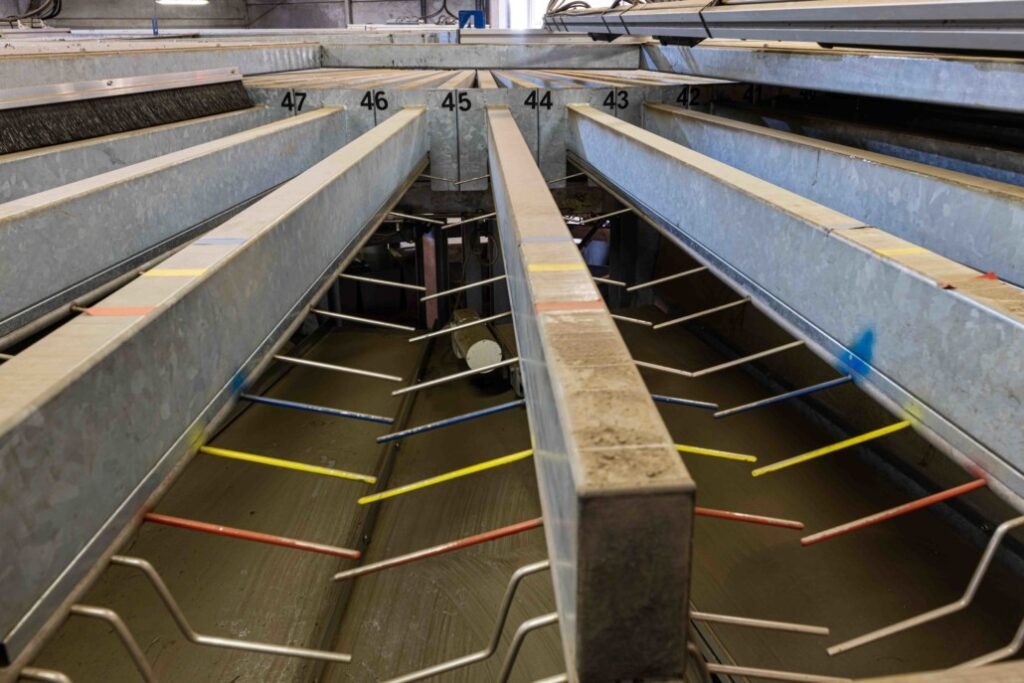
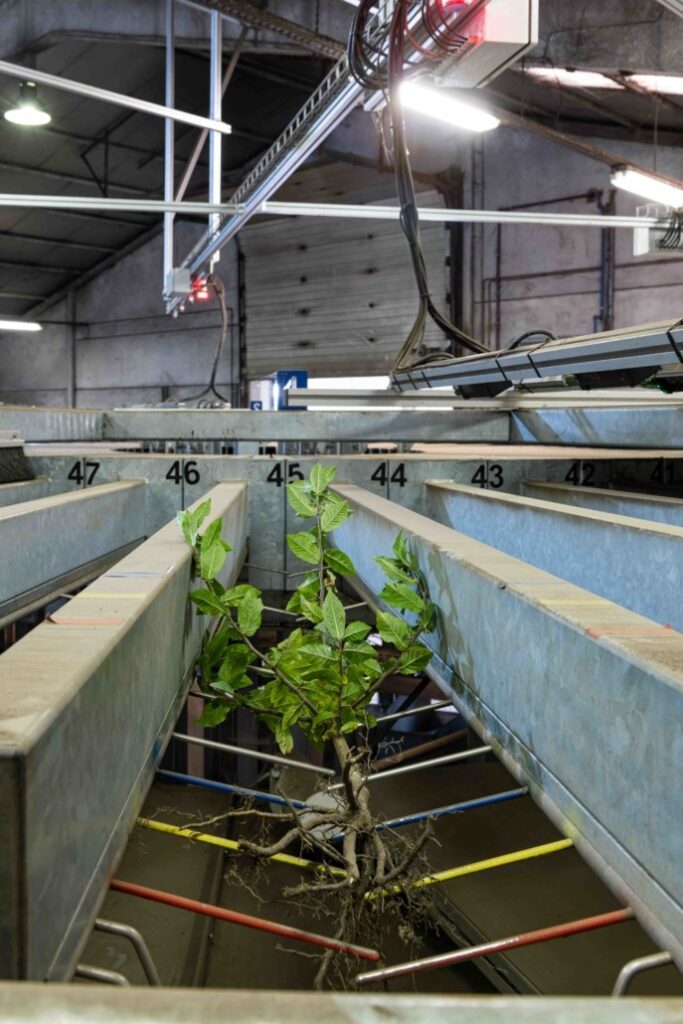
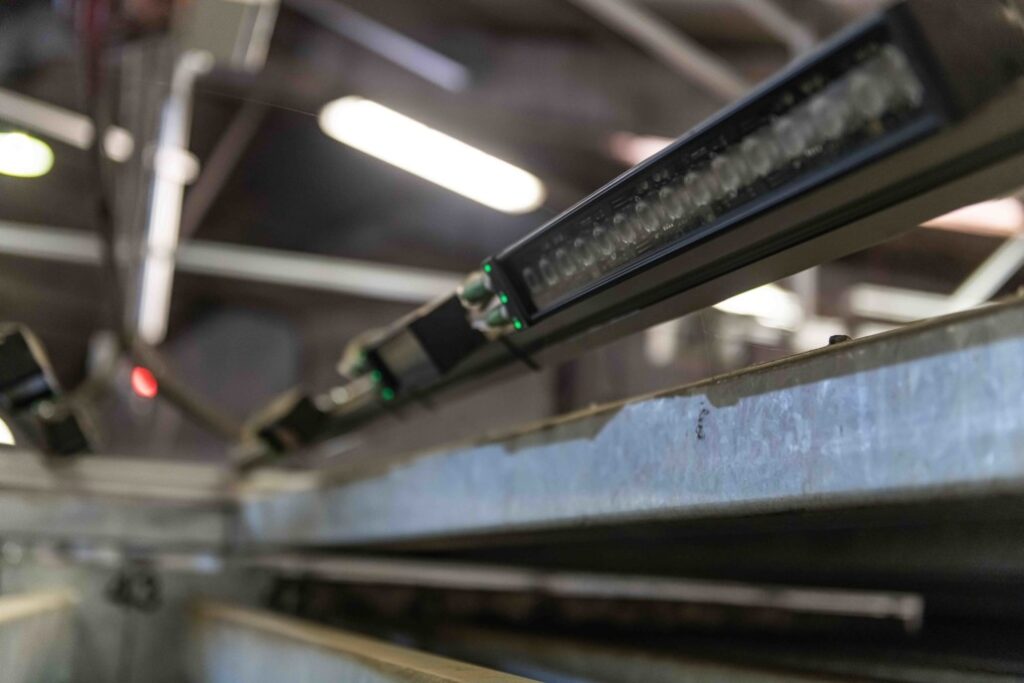
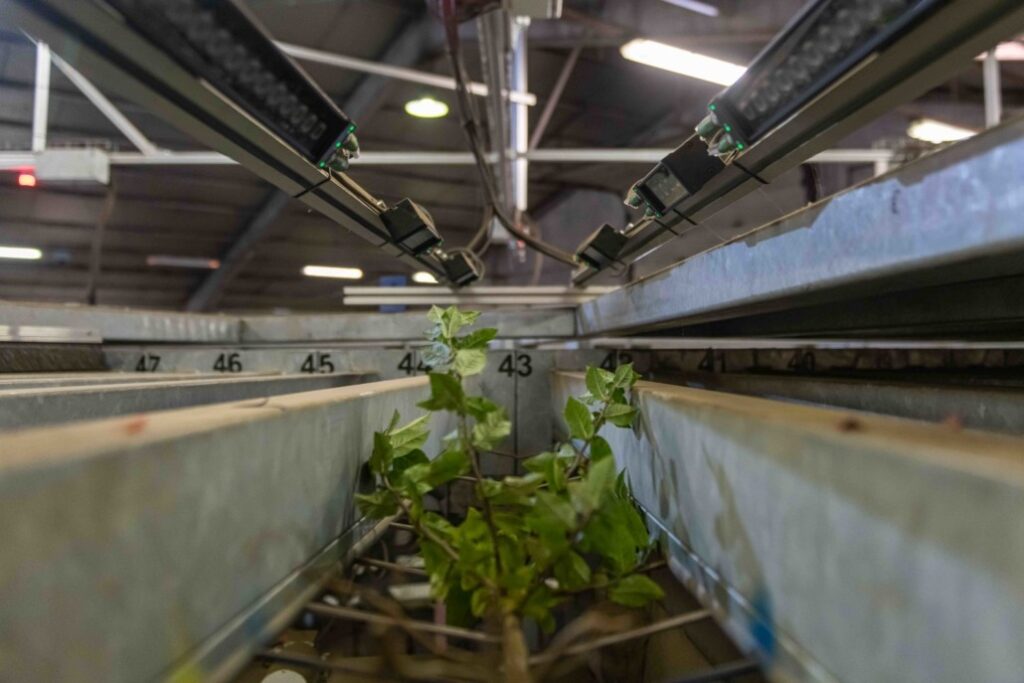
A vision system automatically measures diameter, length and curvature. Based on those parameters, each sapling falls through doors to the appropriate sorting compartment, where they are collected into bundles. Once a bundle reaches the set number, it goes to the take-out position where an operator bundles and packs them.
The result: sorted by the chosen parameter and counted exactly.
The smart thing about the approach
SMO designed a carousel principle in which each sapling falls through to the right compartment with minimal energy. Root contamination thus does not enter the mechanics. Less maintenance, less downtime.
Engineering and production under one roof
Water, frost and thorns proved more challenging in practice than anticipated on paper. The vision system had to correctly filter out background noise and unwanted details, which required some trial and error.
Because engineering and production are side by side at SMO, the team was able to test, adjust and validate solutions quickly without waiting weeks for external parties.
The machine in action
The Result
The Treegrader sorts up to 8,000 trees per hour with just five operators. Manually, this required more than double the number of staff.
More importantly, the machine determines length, diameter and curvature through an algorithm, not the human eye. That makes sorting consistent and objective. And a fixed working cadence makes scheduling orders more reliable.
Technical Specifications
- Type Automatic tree grading machine with vision
- Product Forest plants (50-100 cm)
- Parameters Length, diameter, curvature
- Capacity Up to 8,000 trees per hour
- Operators 4 inserts + 1 take-out
- Completion 2015