

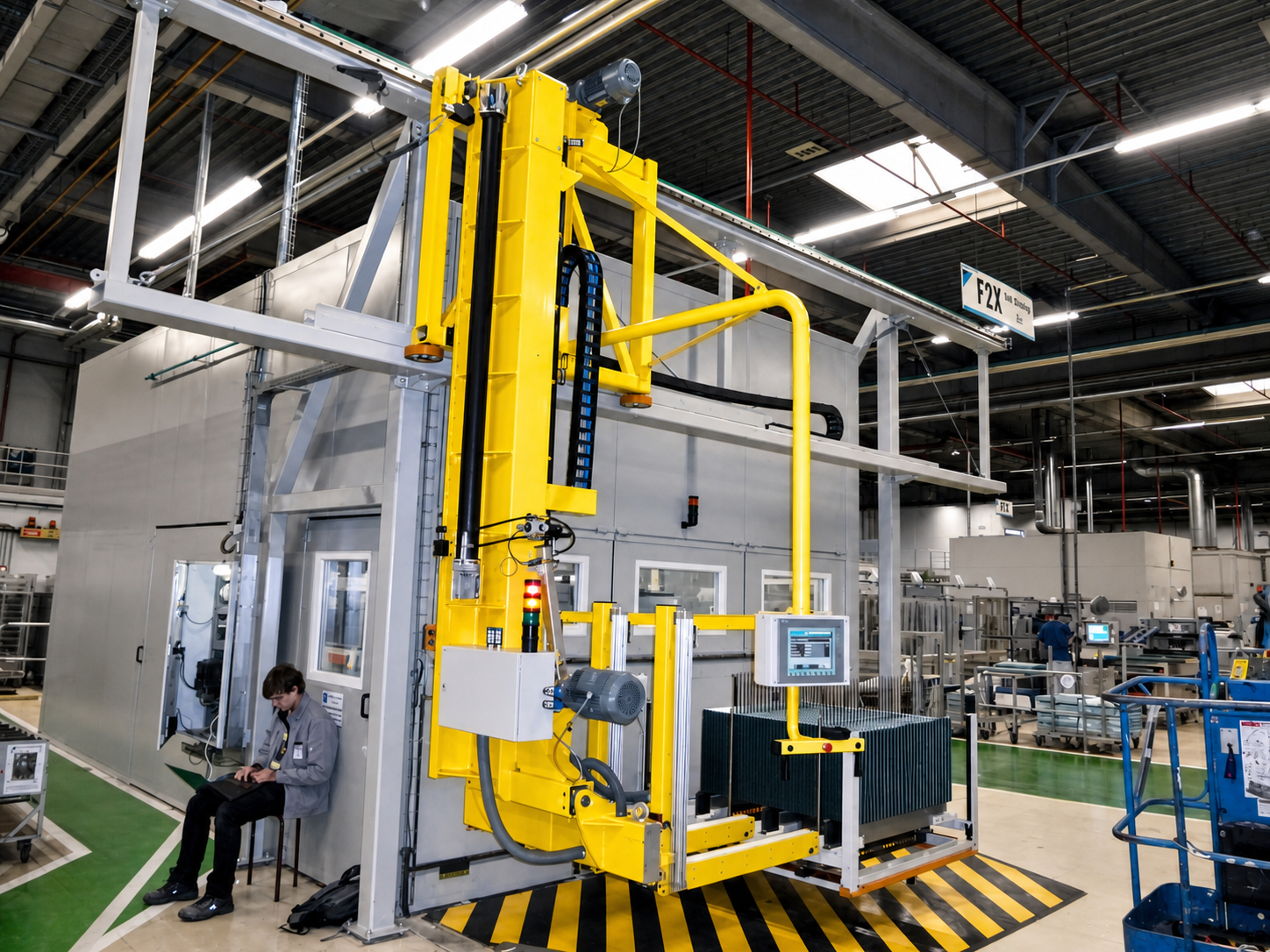
Not every production problem fits into a catalogue. Sometimes your product is too fragile, your process too specific, your line too tight, or your volume too variable for what the market offers as standard. That's when customisation comes into the picture.
But what does it actually mean? And when is it the right choice?
Standard does not solve everything
Standard machines exist because many processes are similar. Conveyors, packaging machines, palletisers: there are proven solutions for common applications. Logical. Efficient. Often the best choice.
But standard has limits. A machine designed for Product A will not automatically work for Product B. Especially if B has a different shape, needs to be faster, or needs to fit into an existing line that was not built with B in mind.
That's where the conversation about customisation begins.
When customisation?
There is no checklist that says: now you have to go custom. But there are situations that consistently lead to it.
Your product is not standard. Fragile, sticky, irregular in shape, extremely heavy or just gossamer. Products that do not behave as machines expect require machines to adapt.
Your process doesn't exist yet. You develop something new. There is no vendor who has built exactly this before, because no one has done exactly this before.
Your line has grown historically. It must fit into an environment that is not shown on drawings. Between existing installations, under a ceiling that is too low, next to a column that cannot budge.
Your volumes fluctuate. Ten variations today, 30 tomorrow. A standard machine that does one thing well becomes a burden when flexibility is more important than speed.
Your bottleneck is specific. Not the whole line should be different. One step gets stuck and pulls the rest with it. Then you don't build a new factory, but solve that one bottleneck.
What customisation requires
A tailor-made machine is not an impulse buy. It takes time, commitment and trust.
Time, because engineering is not instantaneous. A solution that works in your environment must first be understood, then designed, then built and tested.
Engagement, because nobody knows your process better than you. A good machine builder asks questions. Lots of questions. And expects honest answers, including about what doesn't work.
Trust, because you are buying something that does not yet exist. You choose a partner based on approach, references and conversations. Not on the basis of a product picture.
What you get in return
A machine that does what you need it to do. Not almost. Not with workarounds. Not with an operator manually correcting the same flaw every morning.
It sounds obvious, but it's exactly where standard sometimes goes wrong. A solution that fits 90% costs you that other 10% every day. In time, in mistakes, in frustration.
Customisation closes that gap.
The right question
The question is not: do I need standard or customisation? The question is: what do I need and does that already exist?
If it exists and it fits: buy it. If it doesn't exist or doesn't fit: get it built. By someone who understands the problem before proposing a solution.
That's not sales. That's engineering.
Want to discuss a specific challenge? Get in touch.